
Photo recognition
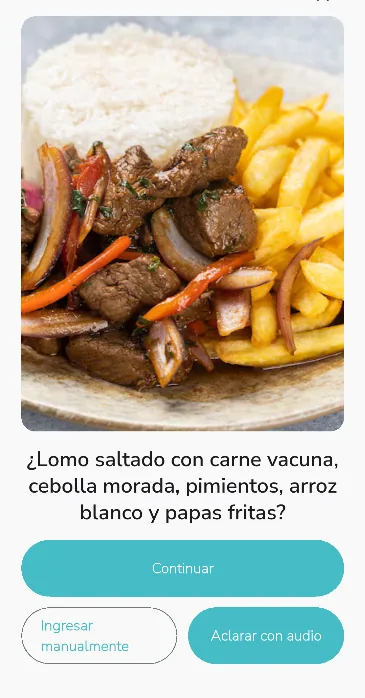
Take a photo of your plate. BananaSnap identifies the foods and estimates the portion.
Carbohydrates, from a photo
BananaSnap recognizes your plate and estimates the grams of carbohydrates in seconds. Made in Mendoza for people with type 1 and type 2 diabetes, it helps you keep a daily record and share it as a PDF with your doctor or nutritionist.


Everything in one place
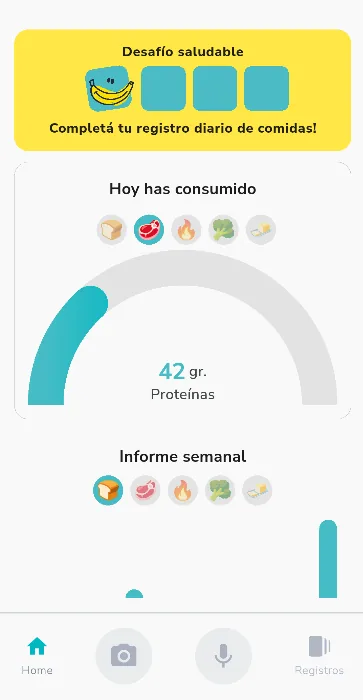
One photo is enough to estimate the carbohydrates on your plate and have them ready for your appointment.
Take a photo of your plate. BananaSnap identifies the foods and estimates the portion.
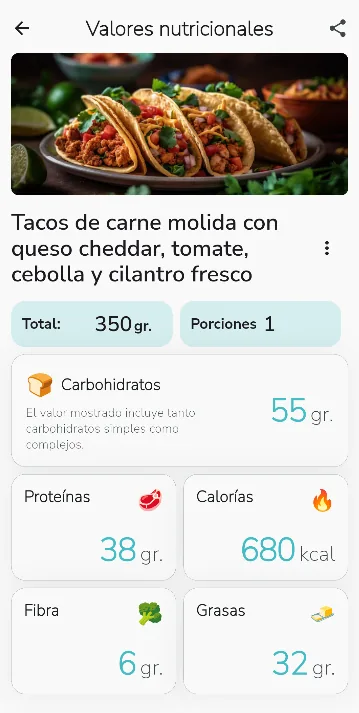
See how many carbohydrates each meal has, designed for day-to-day diabetes management.
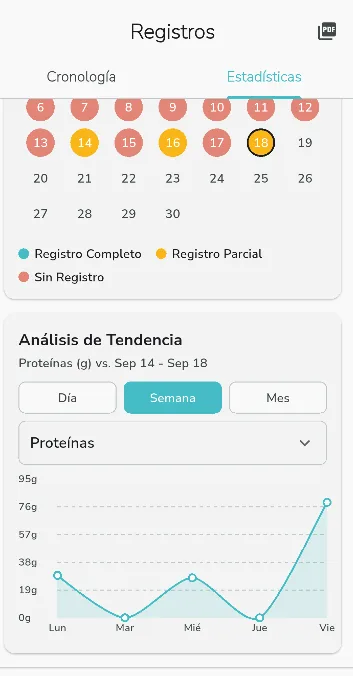
Save each meal and export a PDF report for your doctor or nutritionist.
Free on Google Play for Android and as a web app (PWA) on iPhone. If you want, BananaSnap Premium is a monthly subscription of 14,900 Argentine pesos with unlimited scans, full history, and 30- and 90-day PDF reports.
Made in Mendoza
Frequently asked questions
BananaSnap is an Argentine app for counting carbohydrates from a photo: it recognizes your plate and estimates the grams of carbohydrates in seconds, designed for people with type 1 and type 2 diabetes. It was made in Mendoza and helps you keep a daily record of what you eat so you can talk it through with your doctor or nutritionist.
Take a photo of the plate and BananaSnap identifies the foods, estimates the portion, and shows you how many grams of carbohydrates it has. You can save each meal in your history and export a PDF report to take to your appointment with your doctor or nutritionist.
Yes. BananaSnap was created for people with type 1 and type 2 diabetes (and for parents of children with diabetes) who need to count carbohydrates several times a day, without a scale or lookup tables. Carbohydrate counts are a figure your healthcare team uses to adjust insulin, but BananaSnap is a support tool: it does not calculate insulin doses or replace medical advice.
The app does not store glucose values you enter by hand. If you connect LibreLinkUp from the website, BananaSnap stores the sensor readings (value, time, and trend) and shows them on the chart next to your meals. That data is not sold, not sent to the ad network, and not used to choose or show ads. It is not sent to an artificial intelligence service. The details are in the privacy policy (https://www.bananasnap.ar/privacidad).
Yes. BananaSnap recognizes dishes such as Argentine asado and Argentine empanadas, and it is designed to estimate the carbohydrates in food from Argentina.
BananaSnap gives a carbohydrate estimate, not a weighed measurement: accuracy depends on the plate, the lighting, and whether there are hidden ingredients such as flour, sugar, or sauces. To improve the estimate, take the photo from above, with the whole plate in view, and use your hand as a size reference.
Yes. Seeing the carbohydrates on each plate makes it easier to notice how much ultra-processed food adds up and to make more room for fruit and vegetables day to day. BananaSnap does not build diets: you make decisions about what you eat with your healthcare team.
BananaSnap is a free download from Google Play for Android and, on iPhone, it is used as a web app (PWA) from https://apple.bananasnap.ar/. It is freemium: if you want, you can subscribe to BananaSnap Premium, a monthly subscription of 14,900 Argentine pesos that includes unlimited scans, full history, and 30- and 90-day PDF reports.
BananaSnap is a Rioplatense Spanish alternative, made in Argentina and focused on counting carbohydrates for diabetes management, while Cal AI is in English and centers on calories, and MyFitnessPal relies mostly on manual entry against a food database. With BananaSnap you do not have to look up each food: a photo is enough to see the grams of carbohydrates on your plate.
Your photos are stored in Supabase, on servers in the United States, and sent to Google Cloud (Vertex AI) to estimate the nutrients in that meal. BananaSnap does not sell them and it does not use them to train models. People who use BananaSnap without Premium, with an anonymous session or a free account, see Google AdMob ads on Android. Premium and administrator accounts do not see ads. It does not send meals, photos, carbohydrates, weight, glucose, or the profile to the ad network, and it does not use them for advertising. The details and how to delete your account are in the privacy policy (https://www.bananasnap.ar/privacidad).